Every October the same question lands in my inbox and my text messages: should I buy winter tires on rims, or just have my winter tires swapped onto the wheels I already have? After 15 years working on alloy wheels across Toronto and the GTA, I have a clear answer, and it is probably not the one the tire shop gives you, because their answer changes depending on what they are selling that week. ❄️
This guide walks through the real math of winter tires on rims versus seasonal remounting, what a second set does for the alloy wheels you actually care about, when to book the changeover in Ontario, and the one thing almost everyone forgets to do before their good wheels go into storage.
The Two Options, Explained in Plain Language
Option one: seasonal remounting. You own one set of wheels. Twice a year, a shop peels the tires off your rims and mounts the other season’s tires onto the same rims. You pay for mounting and balancing every single time.
Option two: winter tires on rims. You own two complete sets: your original alloys wearing the summer or all-season tires, and a second set of wheels, usually steel, wearing the winters. The changeover becomes a simple bolt-on wheel swap.
The second option costs more up front and wins almost every time after that. Here is why.

The Real Math: Winter Tires on Rims or Not 💰
| Cost item | Seasonal remount (one set of wheels) | Winter tires on rims (two sets) |
|---|---|---|
| Up front | $0 | $400 to $800 for steel wheels, or $800+ for alloy |
| Every changeover | $100 to $180 mount and balance | $60 to $100 swap, or free with a jack and 30 minutes |
| TPMS sensors | Reused, but stressed at every remount | $200 to $400 once for a second set (optional on many cars) |
| Wear on your wheels | Tire machine contact twice a year, every year | Zero contact with your good alloys |
| Break-even | – | Typically the third winter |
Two changeovers a year at Toronto prices means seasonal remounting costs $200 to $360 annually, forever. A basic steel wheel package pays for itself around year three, and everything after that is savings. If you keep cars five or more years, and most of my customers do, winter tires on rims is simply cheaper.
But the money is honestly the smaller half of the argument.
What Remounting Does to Alloy Wheels (The Part I See Weekly)
I repair the aftermath of tire machines all winter. Every remount means metal tools working around your rim’s edge under pressure. Done carefully, it is fine. Done quickly on a slushy November afternoon with forty cars in the queue, it leaves the scratched lips, gouged beads, and bent balance-weight flanges that end up in my repair schedule. Twice a year, every year, the odds catch up with your wheels.
A dedicated winter set means your alloys are touched by a tire machine close to never. That alone preserves hundreds of dollars of finish over a car’s life.
There is a second benefit that matters even more in the GTA: your good wheels skip winter entirely. Road salt and brine are what destroy alloy finishes here. Corrosion creeps under the clear coat, the finish peels, and by spring the wheel needs refinishing. Steel rims for winter tires shrug all of that off, and if they do get ugly, nobody cares, because they cost a fraction of one alloy repair. Your alloys spend the salt season warm, dry, and perfect.
Steel Rims for Winter Tires, or a Second Set of Alloys?
For most drivers, steel is the right call: cheapest, toughest against pothole hits, and invisible under hubcaps if looks matter to you. Winter alloys make sense in two cases: your car’s brake clearance will not accept the cheap steel sizes, or appearance genuinely matters to you year-round. If you go winter alloy, pick a simple design that is easy to clean, because intricate spokes trap salt. For nine out of ten GTA commuters though, steel rims for winter tires remain the boring, correct answer.
Smaller is also smarter. Downsizing an inch (say from 19 to 18 or 18 to 17, where your brakes allow) buys you a taller tire sidewall, which is extra armor against Toronto’s pothole season and usually cheaper rubber too. For the full comparison of the two materials, my alloy rims versus steel rims guide goes deeper.


When to Put On Winter Tires in Ontario 🗓️
People ask when to put on winter tires in Ontario as if there were one fixed date, but the honest answer is a temperature, not a calendar day. The rule of thumb is the 7 degree rule: once daytime temperatures consistently sit below 7 degrees Celsius, winter rubber outperforms all-seasons, on dry pavement included. In the GTA that usually means the second half of October through mid November. My practical advice:
- Book your changeover for late October. Waiting for the first snowfall means competing with everyone else who waited, and shops book out two weeks solid.
- Do not go too early either. Winter compounds wear faster in warm weather, so September is premature in most years.
- Remember the insurance angle. Ontario insurers are required to offer a discount for running four winter tires, typically around 5 percent. Ask yours.
- Swap back in April, once temperatures hold above 7 degrees.
The Step Everyone Forgets: Inspect Before You Store
Whichever option you choose, the changeover is the one moment your wheels are off the car and easy to look at. Before your alloys go into the basement or your winter set goes on, check for:
- Curb rash on the lips and spokes. Scraped edges are open doors for salt, and rash that sits all winter under storage humidity comes out worse in spring. Fixing curb rash now costs the same as fixing it in April, except April-you also has corrosion.
- Slow leaks and bends. A wheel that needed topping up all summer likely has a bent lip or a hairline issue. Straightening it before storage through our rim refinishing and repair service means mounting a healthy wheel in spring.
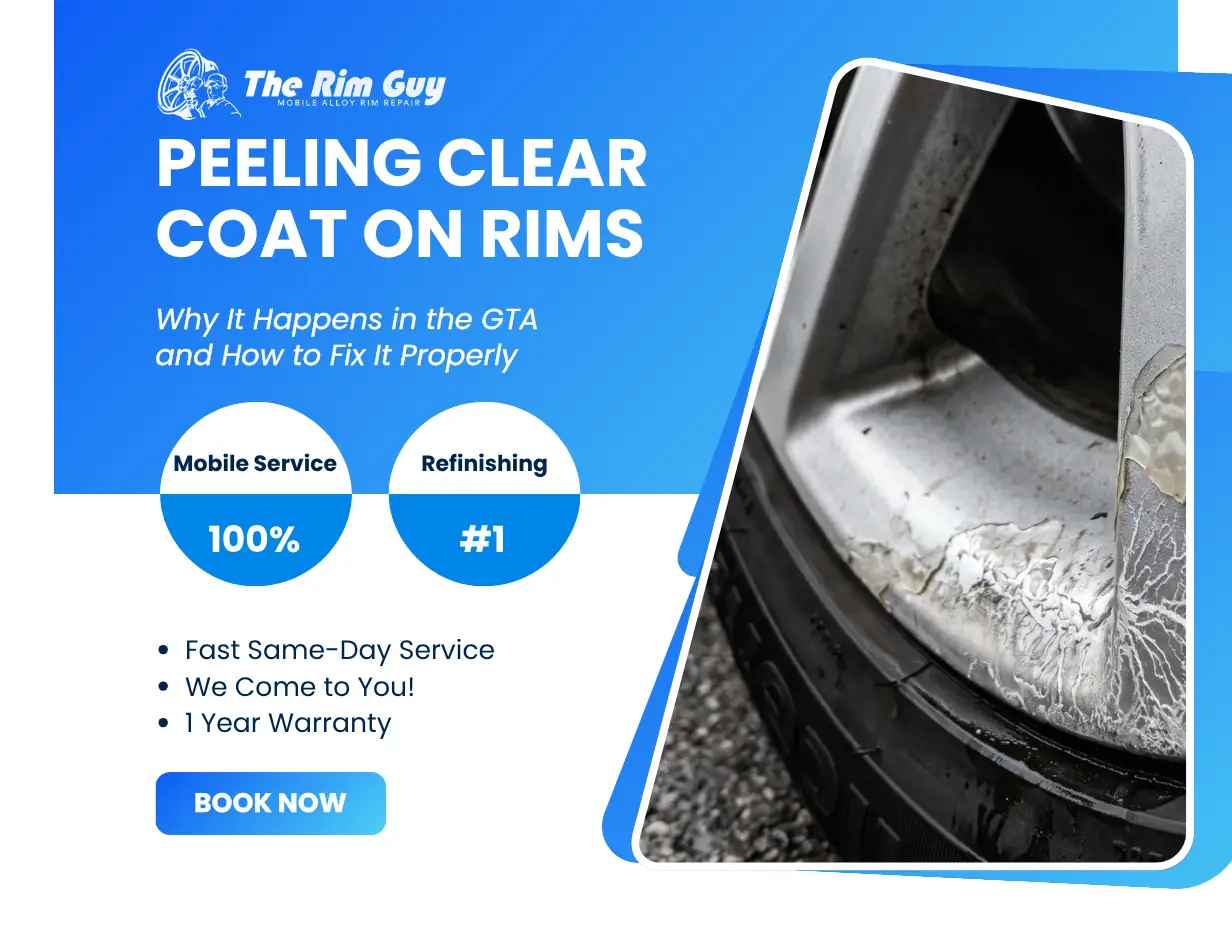
- Peeling or bubbling finish. That is the clear coat failing, and our winter rim protection guide explains why GTA winters accelerate it.
Because our service is fully mobile, this is genuinely a one-visit job: we do your tire change and rim repair in the same driveway appointment, so the damaged wheel gets fixed on the spot instead of going into storage broken. Most single-wheel repairs take about 90 minutes alongside the swap.
Storage Done Right (Two Minutes of Reading, Months of Protection)
- Wash and fully dry the wheels before storing. Brake dust left on a stored wheel eats finish quietly for five months.
- Bag each wheel or use wheel totes, and store them out of sunlight.
- Stack mounted wheels flat or hang them; never stand bare tires upright in one spot for months.
- Skip the concrete-floor myth stress, but do avoid storing next to a furnace or ozone sources like electric motors.
- Photograph your alloys before storage. If anything happens over winter, you will know.
So, Winter Tires on Rims or Not: My Actual Recommendation
If you plan to keep your car three winters or more: yes, buy the second set, put your winter tires on steel rims, downsize if your brakes allow, and let your alloys hibernate. You will save money from year three onward, your good wheels will dodge both the tire machine and the salt, and your changeovers become 30-minute bolt-on jobs you can even do yourself.
If you lease short-term or sell cars every two years, seasonal remounting is defensible. Just budget for the mounting fees, and inspect your alloys at every changeover, because lease-return inspectors bill curbed wheels at rates that make my repair prices look like charity.
Frequently Asked Questions
? Should I buy winter tires on rims if I lease my car?
? Do I need new TPMS sensors for a second set of rims?
? Will steel rims fit over my brakes?
? Is it worth repairing curb rash before storing my alloys?
? Can you do the tire changeover and a rim repair in one visit?
Book Your Changeover Before the Rush
The first snowfall books every shop in the GTA solid within 48 hours. Beat it: schedule your swap for late October now, and if any wheel on either set needs attention, send us a photo. Call or text 416-876-6549 and we will handle the tires and the rims in one visit. ⛄