Every year around late October, my phone starts filling up with the same photos: white crusty spots spreading across alloy wheels, clear coat bubbling at the edges of last summer’s stone chips, and finishes that looked fine at Thanksgiving turning chalky by Christmas. And every spring, I repair the wheels that those photos turned into. After more than 15 years fixing alloy wheels across the GTA, I can tell you the difference between the drivers who need a full set restored every March and the drivers who never call me twice: the second group starts their winter rim protection in September, before the first salt truck rolls down the 401.
This guide covers what road salt actually does to your wheels, the seven winter rim protection steps I recommend to every customer before the first freeze, and an honest comparison of every protection option from a $15 bottle of sealant to a full powder coat.
What Road Salt Actually Does to Alloy Wheels 🧂
Toronto and the surrounding municipalities spread enormous quantities of salt and brine every winter, and your wheels live closer to it than any other part of your vehicle. The mechanism matters, because it explains why winter rim protection is about timing rather than effort.
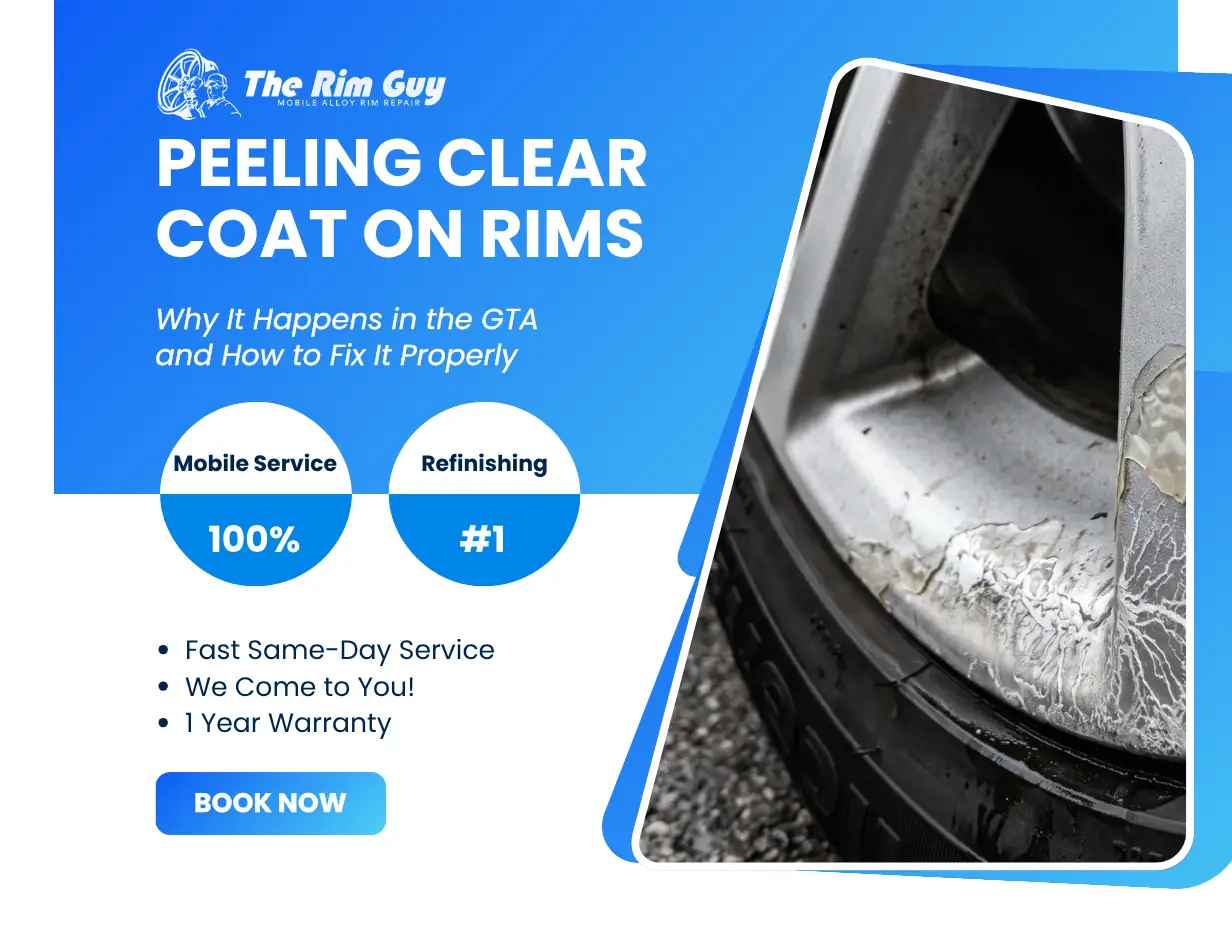
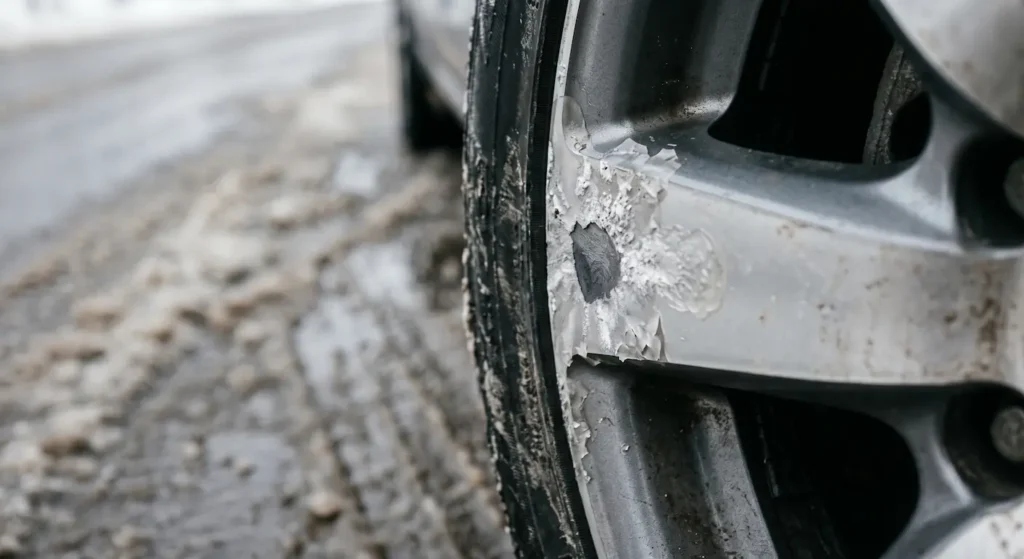
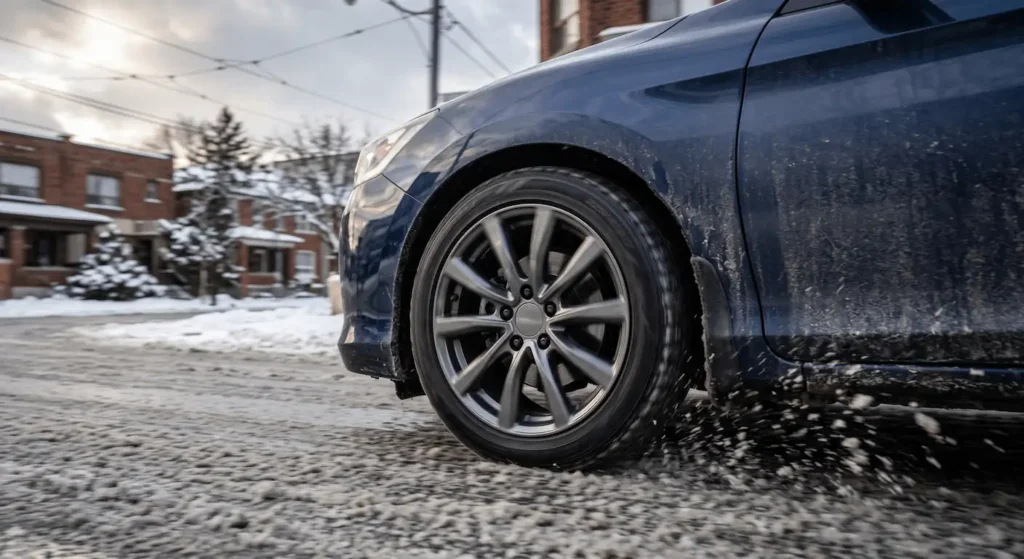
Salt brine is not just corrosive on its own. Mixed with slush, it forms an electrolyte that dramatically accelerates galvanic corrosion on aluminum. On a factory-fresh wheel, the clear coat keeps that electrolyte away from the metal. The trouble starts wherever the coat is broken: a stone chip from the Gardiner, a curb scuff from a tight Leslieville side street, a scratch from last winter’s tire swap. Brine wicks into the opening, creeps under the surrounding clear coat, and starts corroding the aluminum underneath. By the time you see white blooms or peeling edges, the damage extends well beyond the visible spot. That is why alloy wheel corrosion always seems to appear suddenly in February; it has been working invisibly since December.
Add winter’s freeze-thaw cycle, which pumps that brine deeper into every crack each night, and heat from your brakes baking the residue on, and you have the perfect corrosion machine running under your car for four months straight.
The Damage Timeline (What Repairs Cost at Each Stage) 💸
Here is how untreated road salt wheel damage typically progresses through a GTA winter, and what it costs to fix at each stage. Catching it one stage earlier is always cheaper.
| Stage | What You See | Typical Repair |
|---|---|---|
| Sept: chips & scuffs | Small clear coat breaks, minor curb rash | $80-$130 per wheel |
| Dec-Jan: infiltration | Dull patches, faint white spotting | $120-$180 per wheel |
| Feb-Mar: active corrosion | White blooms, bubbling, peeling clear coat | $150-$250 refinishing |
| Spring: structural | Pitting into the metal, slow air leaks at the bead | $200+ or replacement |
The first row is the whole argument for acting now. A September repair of the chips and scuffs your wheels already carry closes the doors that salt walks through, and it is the cheapest line in that table by a wide margin.
Why Winter Rim Protection Beats Spring Repair (The Math) 🧮
Here is the calculation I walk customers through every fall. A full winter rim protection routine costs about $40 in products and maybe two hours of your time spread across four months. Skipping it and landing in row three of that table costs $150 to $250 per wheel, and most corrosion cases involve all four.
That is $600 to $1,000 against $40, and the $40 option also keeps your wheels looking right all season instead of just fixing them after the fact. In fifteen years I have never met a driver who regretted the prep, and every March I meet plenty who regret skipping it.
Winter rim protection is one of the few car care jobs where the cheap option and the correct option are the same option.
7 Steps to Winter-Proof Your Rims Before the First Freeze 🛠️
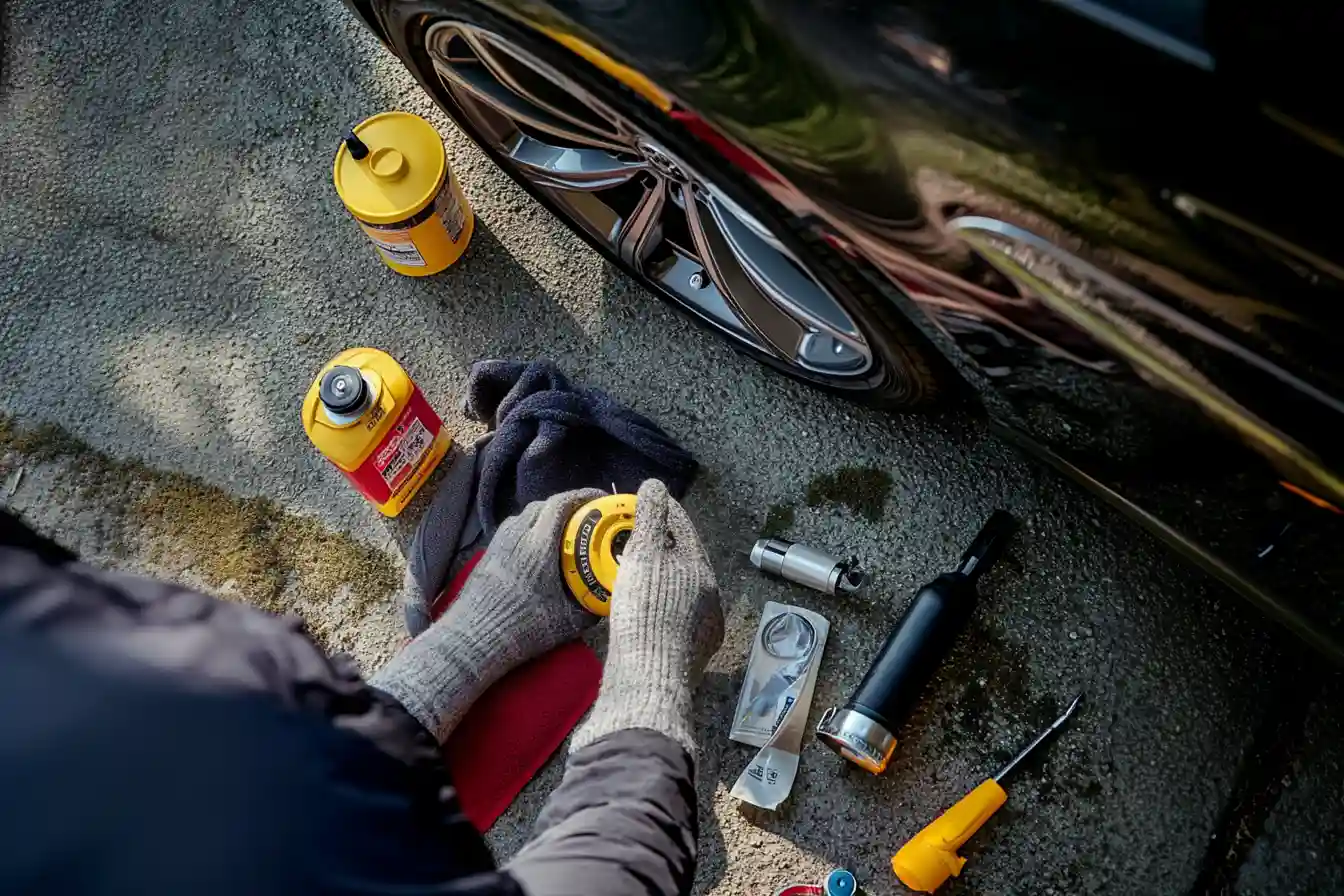
- Repair existing damage now. This is the step that determines everything else. Every chip, scratch, and patch of curb rash is an open door for brine, and no spray-on product seals an open door. A mobile curb rash repair takes about an hour per wheel in your driveway and closes the finish completely.
- Deep clean and decontaminate. Before any protection goes on, wheels need embedded brake dust and tar removed with a dedicated iron remover, not just soap. Trapped contaminants under a sealant corrode in place all winter.
- Switch to pH-neutral wheel soap. The acid-based cleaners sold for “heavy duty” wheel cleaning strip protective layers and etch polished finishes. All winter long, pH-neutral only.
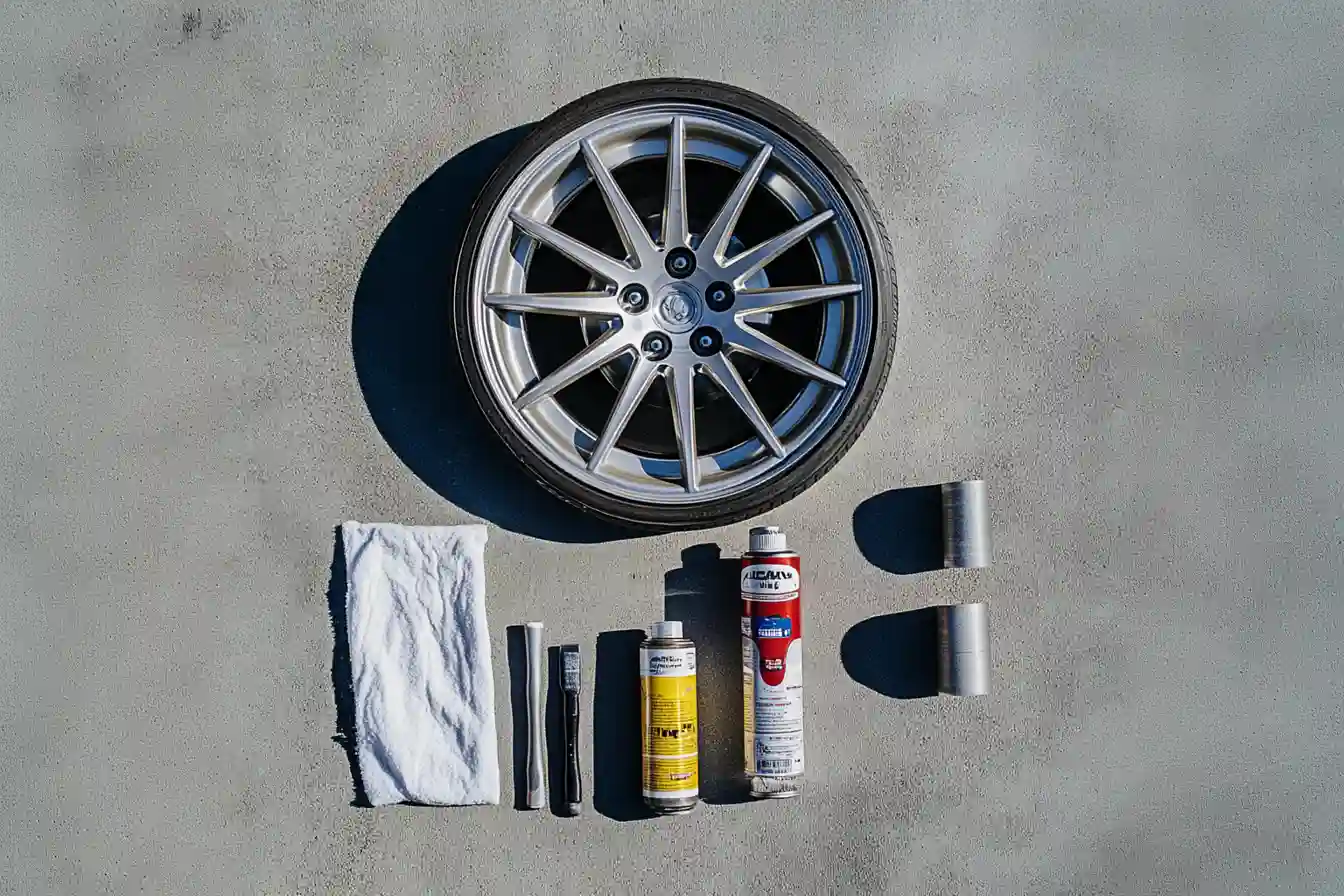
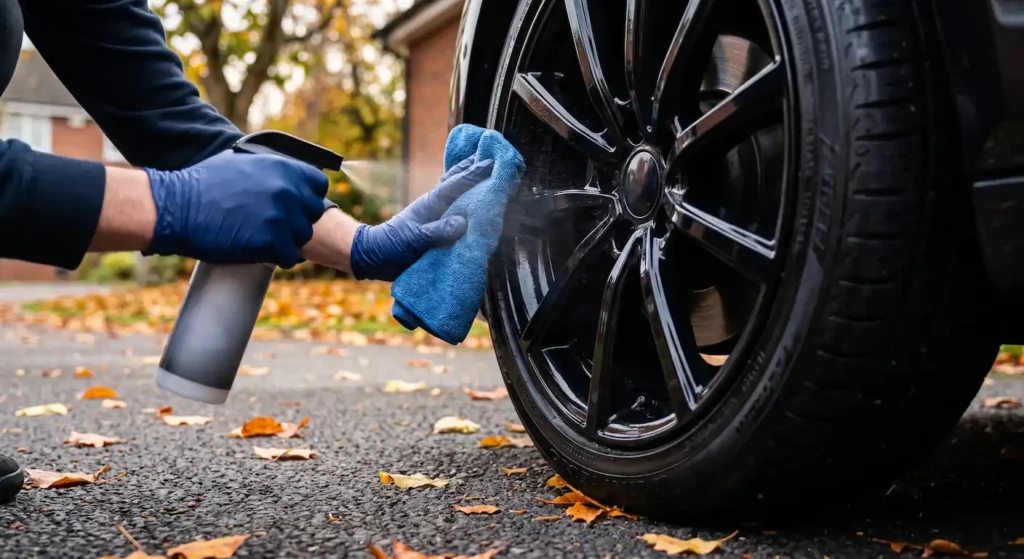
- Apply a dedicated wheel sealant or ceramic spray. A sacrificial layer that makes salt rinse off instead of bonding. Expect a quality ceramic spray to last 2 to 3 months, which means one fall application and one top-up in January.
- Wash on a schedule, not on appearance. Every two to three weeks through winter, and within a day or two after a major storm-and-salt event, rinse the wheels and wheel wells even if the rest of the car can wait. Salt sitting quietly is salt working.
- Check tire pressure monthly. Cold snaps drop pressure, underinflated tires flex more, and flexing works brine into the bead seat where corrosion causes the slow leaks we get called about every February.
- Consider upgrading the finish itself. If your wheels are already refinished every couple of winters, stop paying for the same repair twice. The comparison table below shows why.
Protection Options Compared: From $15 to Set-and-Forget
| Option | Upfront Cost | Protection Lasts | Best For |
|---|---|---|---|
| Wheel wax / sealant | $15-$30 | 4-8 weeks | Newer wheels, hands-on owners |
| Ceramic spray coating | $25-$60 | 2-3 months | Most daily drivers |
| Professional ceramic coat | $150-$300 set | 1-2 winters | Premium finishes, low upkeep |
| Powder coating | $210-$250 per wheel | 5-10 years | Wheels already needing refinishing |
| Dedicated winter wheel set | $800-$1,500 | Indefinite | Protecting expensive OEM alloys |
The powder coating row deserves the honest explanation I give customers in person. If your wheels are healthy, protect them with the cheaper rows; a $40 ceramic spray on an intact finish is genuinely good winter rim protection. But if your wheels already need repair going into this winter, powder coating services cost only modestly more than a standard refinish while replacing paint with a baked-on polymer shell two to three times thicker. Salt cannot penetrate an intact powder coat, which is why it is the finish we recommend for drivers who are tired of meeting me every spring.
The dedicated winter set is the other honest answer, and for some drivers the right one. Our alloy rims vs steel rims comparison covers when cheap steel winters make more sense than protecting an expensive set of factory alloys.
Winter Rim Protection: Quick Answers ❄️
When should I start protecting my rims for winter? September, or at the latest early October. Every step works best on wheels that are clean, dry, and above 10°C, and repairs cure best before the cold arrives. Waiting until the first snowfall means applying protection over damage that salt has already found.
Is winter rim protection worth it on older wheels? Especially on older wheels. An aging clear coat has more micro-cracks for brine to exploit, so an unprotected ten-year-old wheel corrodes faster than a new one. If the finish is already failing, this is the season to refinish or powder coat it rather than protect a coating that is past saving.
Do black or powder coated wheels still need winter wheel care? Yes, but far less. A healthy powder coat resists salt on its own, so a quick rinse after storms is usually enough. Painted and machined finishes need the full routine, because their protection is only as good as their thinnest layer of clear coat.
Already Seeing White Spots? Do This Before It Freezes
If corrosion has already started, the window between now and the first hard freeze is the cheapest moment you will get for the next six months. Light corrosion caught in September is a rim refinishing job; the same corrosion after a winter of freeze-thaw is often pitting that no cosmetic repair fully erases. Send a photo of your worst wheel to 416-876-6549 and we will tell you honestly whether it needs a spot repair, a refinish, or nothing but a good sealant, usually within a few hours.
We come to your driveway, office, or dealership anywhere in the GTA, most wheels take about an hour, and every repair is backed by our one year warranty. The salt trucks are coming either way. The only question is whether your wheels are ready. ❄️