Every November my phone fills up with the same question from drivers across the GTA: what are the best rims for winter tires? After more than 15 years of repairing alloy wheels from Oakville to Oshawa, I have a strong opinion, and it is not always the answer you get at the tire counter. The right winter set depends on your car, your commute and how much salt your wheels will face between now and April.
This guide covers what type of rims are best for winter in Ontario, how to size them, the fitment details that trip people up, which finishes actually survive road salt, and the real cost of winter rims. I will also walk you through what to check before you buy a used set off Kijiji or Facebook Marketplace.

Quick Answer: What Type of Rims Are Best for Winter? ❄️
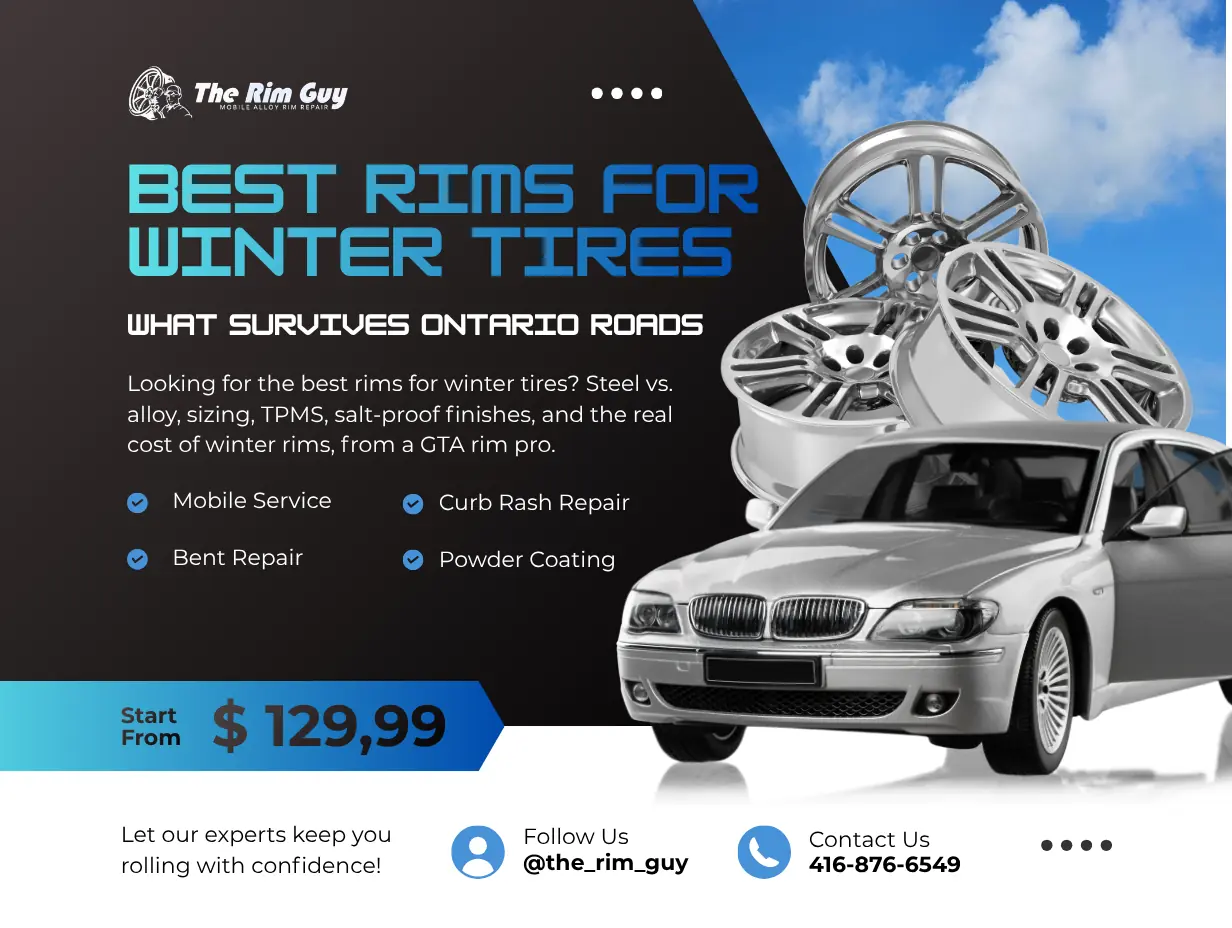
For most daily drivers in the GTA, the best rims for winter tires are basic steel wheels or simple alloys with a durable painted or powder coated finish, usually one inch smaller than your summer wheels. Here is the short version:
- Steel wheels: the cheapest option, tough on potholes and easy to repaint, but heavier and plain looking.
- Winter alloys: lighter and better looking, but they need a sealed finish to resist salt.
- Avoid for winter: chrome, polished and diamond cut wheels, which corrode quickly once salt gets into the finish.
If you want the full material comparison, our alloy vs steel wheels guide goes deeper. This post focuses on choosing, fitting and protecting the set itself.
Steel vs Alloy Rims for Winter Tires at a Glance
| Factor | Steel winter rims | Alloy winter rims |
|---|---|---|
| Price per wheel (new) | $60 to $95 | $160 to $300 |
| Weight | Heavier | Lighter, sharper handling |
| Pothole damage | Usually bends, can often be straightened | Can bend or crack |
| Salt resistance | Rusts on bare spots, easy to repaint | Corrodes under chipped clear coat |
| Looks | Plain, often with hub caps | Closer to your summer wheels |
| Best for | Budget sets and long highway commutes | Drivers keeping the car for years |
On the 401, the QEW and the Gardiner, both materials take a beating. The difference is how they fail. Steel rusts slowly and bends. Alloy looks better for longer, until a chip lets salt under the coating and the finish starts to lift.
Sizing: Why a Smaller Winter Rim Often Works Better 📏
Many drivers choose rims for winter tires one inch smaller than their summer wheels, a practice called minus sizing. A 17 inch wheel with a taller tire, instead of your 18 inch summer setup, has real advantages in a Toronto winter:
- Taller sidewalls absorb pothole hits on roads like Eglinton and the DVP, which protects the rim.
- Narrower tires cut through slush instead of floating on top of it.
- Smaller winter tires usually cost less to buy.
The catch is that the smaller wheel still has to clear your brake calipers, and the overall tire diameter should stay close to the original so your speedometer and safety systems read correctly. Check the placard in your door jamb or your owner’s manual for approved sizes, and ask your installer to confirm caliper clearance before you buy.
Best Winter Rims by Vehicle Type 🚗
There is no single answer to what type of rims are best for winter, because a compact commuter and a heavy SUV have very different needs. Here is what we usually recommend to GTA drivers:
- Compact cars and commuters: minus-sized steel wheels are the most practical rims for winter tires, especially if you commute on the 401 or the QEW every day.
- SUVs and pickups: check the load rating on any winter wheel, since heavier vehicles need wheels rated for the weight. Steel and simple alloys both work well.
- Electric vehicles: EVs are heavy and often use specific bolt patterns and center bores, so buy rims for winter tires that list your exact model, with the correct load rating and TPMS sensors.
- Luxury and performance cars: alloys usually make the best winter rims here, because steel options may not clear large brakes. Choose a painted or powder coated alloy rather than a machined one.
Five Fitment Details Most Winter Rim Buyers Miss 🔧
- Bolt pattern. The number of lug holes and their spacing, for example 5×114.3, must match your hub exactly. Close is not good enough.
- Center bore and hub-centric rings. Aftermarket winter alloys often have a larger center bore than your hub. Hub-centric rings fill that gap so the wheel centers properly. Without them, you can get a highway vibration that feels exactly like a bent rim.
- Offset. Offset decides how far the wheel sits in or out. The wrong offset can rub on suspension parts or the fender liner, especially with packed snow in the wheel well.
- Lug nuts. Steel and aftermarket wheels often need different lug nuts than your factory wheels. The wrong seat type is a real safety risk.
- TPMS sensors. Most newer cars have tire pressure monitoring. Without sensors in the winter set, you drive all season with a warning light on and lose an early warning for slow leaks. Budget for a second set of sensors.
Cold weather drops tire pressure fast. The Tire and Rubber Association of Canada recommends switching to winter tires once temperatures stay below 7°C (TRAC guidance on when to install winter tires), and that is exactly when slow leaks start showing up. Our guide to slow tire leaks in cold weather explains how to tell a bead leak from a cracked rim.

Which Finishes Make the Best Winter Rims in Ontario Salt? 🧂
This is where my job comes in. Most of the winter damage we repair is not from a single impact. It comes from salt getting under a finish that was already chipped. Here is how the common finishes hold up, based on what we see every spring:
| Finish | Salt resistance | Winter upkeep | Our take |
|---|---|---|---|
| Powder coat | Very good | Rinse weekly | The best winter rims finish if you keep the set for years |
| Factory painted alloy | Good while intact | Seal before winter, fix chips | Fine, as long as chips get repaired |
| Painted steel | Fair | Repaint rust spots every few seasons | Cheap and easy to maintain |
| Diamond cut or machined face | Poor | Constant care | Keep it for summer |
| Chrome | Poor | Constant care | Pits and peels quickly in salt |
If you are buying a set and plan to keep it for several winters, powder coating the wheels before the first snow is one of the best investments you can make. A full strip and single color powder coat runs about $150 to $220 per wheel, and the finish is two to three times thicker than paint. For a set that is already chipped and peeling, rim refinishing restores the finish so salt has nothing to attack.
What Is the Real Cost of Winter Rims in Canada? 💰
The cost of winter rims depends mostly on the material and on whether you buy new or used. Here are the typical numbers we see across the GTA:
- New steel wheels: about $60 to $95 each, before sensors and installation.
- New winter alloys: about $160 to $300 each.
- TPMS sensors: a second set adds to the bill, so ask your tire shop for a quote that includes programming.
- Used sets: often much cheaper on Kijiji, but budget for repairs if there is curb rash or a bend.
Remember the other side of the math. Ontario insurers are required to offer a discount to drivers who use winter tires (CBC News on the Ontario winter tire discount). Having the tires mounted on their own rims also saves you a remount every spring and fall, and it keeps salt away from your summer wheels. For most drivers, a dedicated winter set pays for itself within a few seasons.

Buying a Used Winter Set? 7 Checks Before You Pay 🔍
- Confirm the bolt pattern, center bore and offset match your car.
- Spin each wheel on the car or a balancer if you can. A wobble usually means a bend.
- Look at the inner barrel, not just the face. Cracks and bends often hide there.
- Check the bead seat, where the tire seals, for white crusty corrosion. It is one of the most common causes of slow winter leaks.
- Look for curb rash on the lip. Light rash is cosmetic, but deep gouges can hide cracks.
- Ask whether TPMS sensors are installed and still working.
- Check the tire date codes and tread depth if tires are included.
Light damage is not a deal breaker. We regularly fix curb rash and straighten bent wheels on used winter sets, often for less than the discount you negotiated. Send us photos before you buy and we will tell you honestly whether the set is worth it.
How We Keep Winter Wheels Looking Good Until April
Even the best rims for winter tires last longer with a few simple habits:
- Rinse the wheels weekly during salt season, including the inner barrel. A coin wash works fine.
- Apply a wheel sealant before the first snowfall.
- Fix chips and curb rash before winter, not after.
- Store your summer wheels clean and dry, stacked flat or on a rack.
A powder coated set still benefits from these steps, because salt that sits on any finish for weeks will eventually find a weak spot.
Frequently Asked Questions
? What are the best rims for winter tires?
For most GTA drivers, the best rims for winter tires are steel wheels or simple alloys with a painted or powder coated finish, often one inch smaller than the summer wheels. Chrome, polished and diamond cut finishes are best avoided in winter.
? Are steel or alloy rims better for winter in Canada?
Steel is cheaper and easier to repair after pothole hits, while alloy is lighter and looks better. Both work well in a Canadian winter if the finish is kept sealed and chips are fixed before salt season.
? Do I need TPMS sensors in my winter rims?
If your car has a tire pressure monitoring system, installing sensors in your winter set keeps the warning light off and alerts you to slow leaks, which are common in cold weather.
? How much does a set of winter rims cost?
New steel wheels run about $60 to $95 each and winter alloys about $160 to $300 each, plus TPMS sensors and installation. Used sets cost less but may need repairs.
? Can you powder coat winter rims?
Yes. Powder coating is one of the most salt-resistant finishes for winter wheels. It costs about $150 to $220 per wheel and works on both steel and alloy rims.
Get Your Winter Rims Ready Before the Salt Hits
Whether you are prepping a used set or protecting the alloys you already own, we come to you anywhere in the GTA. Send a photo through our quote form or call 416-876-6549 and we will give you an honest assessment and a price, usually within a few hours. In the end, the best rims for winter tires are the ones that still look good in April.